

Blog
SS513 Safety Standard: What Does it Mean?
Workplace safety in Singapore places strong emphasis on proper protective equipment, and safety footwear is one of the most essential requirements across industries such as construction, logistics, manufacturing, and engineering. Choosing the right pair, however, is not always straightforward.
With many safety shoes in the market carrying different international certifications, it can be difficult to assess whether a product is suitable for use on Singapore worksites. Standards may appear similar on the surface, but differences in testing requirements and protection levels can affect compliance.
This article provides a clear overview of the SS513 safety footwear standard in Singapore, explains how it compares with EN ISO 20345, and outlines the key factors to consider when selecting footwear that meets both safety and regulatory requirements.
What Is SS513?
SS513 is the Singapore Standard that defines the performance requirements for safety footwear used in regulated work environments. It is developed under the Workplace Safety and Health (WSH) framework to strengthen safety culture and reduce workplace risks.
The standard ensures that safety footwear provides adequate protection against common workplace hazards such as impact, compression, slips, and sharp object penetration. It is primarily applied in industries where workers are exposed to moderate to high levels of risk, including construction, logistics, marine, and manufacturing.
To meet SS513 requirements, safety footwear must undergo testing and meet specific performance criteria, including, but not limited to*:
- Toe impact resistance of at least 200 joules
- Compression resistance of up to 15 kN
- Slip resistance on tested surfaces
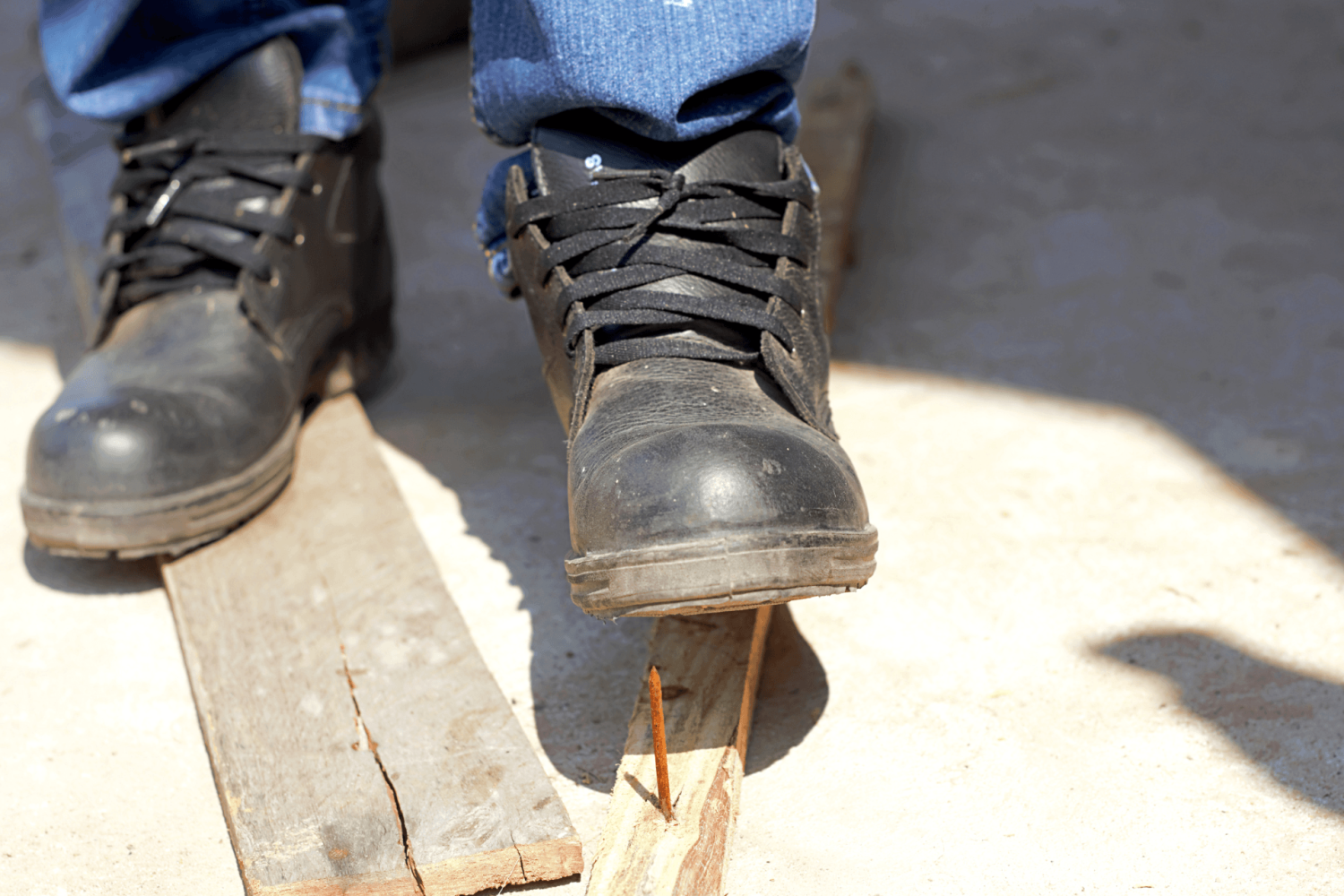
- Puncture-resistant midsoles
- Antistatic or electrical protection properties
- Outsole durability and flex resistance
- Overall construction strength
*Depending on the safety classification, additional requirements may apply.
Footwear that meets these criteria typically includes certified options such as steel-toe boots and composite-toe safety shoes, both of which are designed to provide reliable protection in demanding work environments.
Key Differences Between SS513: 2015 and SS513: 2024
The SS513:2024 revision introduces updates to align Singapore with the latest EN ISO 20345 standard. These changes improve clarity, expand protection levels, and standardise how safety features are classified.
Updated International Alignment
- SS513:2015 was based on EN ISO 20345:2011
- SS513:2024 now follows EN ISO 20345:2022
This update reflects newer testing methods and stricter performance requirements used internationally, ensuring safety footwear meets current industry expectations.
New Safety Classes
The updated SS513 standard expands the safety classification system beyond S1 to S5 by introducing S6 and S7. These new classes include full waterproof protection, making them more suitable for outdoor environments and worksites where exposure to water is common.
Changes to Slip Resistance Ratings
The previous SRA, SRB, and SRC classifications have been removed. Under SS513:2024, footwear is now marked with “SR” if it meets slip resistance requirements. This simplifies the rating system and makes it easier to identify compliant footwear.
Specific Puncture Resistance Labels
SS513:2015 used a single “P” marking to indicate penetration resistance. The updated SS513:2024 standard introduces more detailed classifications:
- P for general penetration resistance
- PL for protection against larger objects
- PS for protection against smaller, sharper objects
This provides clearer visibility on the type of hazards the footwear is designed to protect against.
Clearer Requirements
The revised standard introduces more defined requirements for water resistance, material performance, and overall footwear construction. Testing methods and classification criteria are also more clearly specified, reducing ambiguity when selecting compliant safety footwear.
Why Is It Important to Comply with SS513 Standards?
Compliance with SS513 is not only a safety measure but also a legal requirement under Singapore’s Workplace Safety and Health regulations. Employers are responsible for providing appropriate personal protective equipment, including footwear that meets recognised standards.
Failure to comply can result in several consequences:
- Increased risk of workplace injuries
- Regulatory penalties or enforcement action by the Ministry of Manpower
- Complications with insurance claims
- Greater liability in the event of an accident
Using non-compliant footwear, even if marketed as “safety shoes,” can compromise worker protection. Many imported alternatives are designed for light-duty applications and may not meet the impact or penetration resistance required in industrial environments.
Selecting MOM-approved safety shoes ensures that workers are equipped with footwear that meets both safety and regulatory expectations in Singapore.
SS513 vs. EN ISO 20345
SS513 and EN ISO 20345 are closely related, as Singapore’s standard is developed based on the EN ISO framework. Both have similar requirements for impact protection, compression resistance, and overall footwear performance.
In most cases, safety footwear certified to EN ISO 20345 will meet the technical requirements of SS513. The key similarities and differences are outlined below:
|
Feature |
SS513 (Singapore Standard) |
EN ISO 20345 (International Standard) |
|
|---|---|---|---|
|
Toe Protection |
Requires toe caps tested to withstand impacts up to 200 joules |
||
|
Compression Resistance |
Must withstand compression forces of up to 15 kN |
||
|
Framework |
Adopted from EN ISO 20345 with local implementation |
Serves as the base international standard for safety footwear |
|
|
Recognition |
Referenced for compliance under Ministry of Manpower (MOM) safety requirements |
Globally recognised; Accepted by MOM as an equivalent standard |
|
SS513 Safety Footwear Recommendations
Choosing the right safety footwear depends on the work environment and the level of risk involved. For most industrial environments in Singapore:
- S1P footwear is suitable for indoor settings where penetration resistance is required
- S3 footwear is recommended for outdoor environments, uneven terrain, or areas with higher exposure to hazards
When selecting footwear, consider the following:
- Ensure the shoe is certified to EN ISO 20345 / SS513 standards
- Check the safety classification
- Look for slip resistance marking
- Choose appropriate toe protection
- Assess additional features such as water resistance, heat resistance, or ESD protection depending on the work environment
Comfort and fit are equally important, especially for roles that require long hours on-site. Well-designed safety footwear helps reduce fatigue and improves overall wearability throughout the workday.
Safety Jogger offers a wide range of safety footwear built for both protection and comfort, including lightweight safety shoes, as well as S1, S1P, S2, and S3 models.
👉 Explore the full collection of Safety Jogger safety shoes available in Singapore.
FAQs About SS513 Safety Standard
For most industrial applications, S1P safety shoes are suitable for indoor use, while S3 safety footwear is recommended for outdoor or more demanding environments. Options such as steel-toe boots or composite-toe safety shoes are commonly used, depending on the required level of protection.
Footwear certified to this the EN ISO 20345 standard generally meets Singapore’s SS513 requirements. However, employers should still ensure that the footwear selected is appropriate for the specific work conditions and safety risks present on site.
You can verify compliance by checking the label inside the shoe for EN ISO 20345 certification markings and safety classification details. It is also advisable to purchase from reputable suppliers offering approved safety shoes to ensure that the product meets local safety standards.